A conversation about how you actually work
MOIST
ROBOT
Eight hormones run you. This hour, you learn to run them back.
A 1-hour session on mind, body & habit design
A conversation about how you actually work
Eight hormones run you. This hour, you learn to run them back.
A 1-hour session on mind, body & habit design
Have you ever...
Promised to sleep early — scrolled till 1 a.m.
Promised to hit the gym — opened YouTube.
Promised to be patient — snapped at the kid.
That gap between intention and action isn't weakness.
It's chemistry.
The premise
"You think you're making decisions. Mostly, you're following chemistry."
— Scott Adams, How to Fail at Almost Everything and Still Win Big
Humans are biological machines. The good news: machines can be reprogrammed.
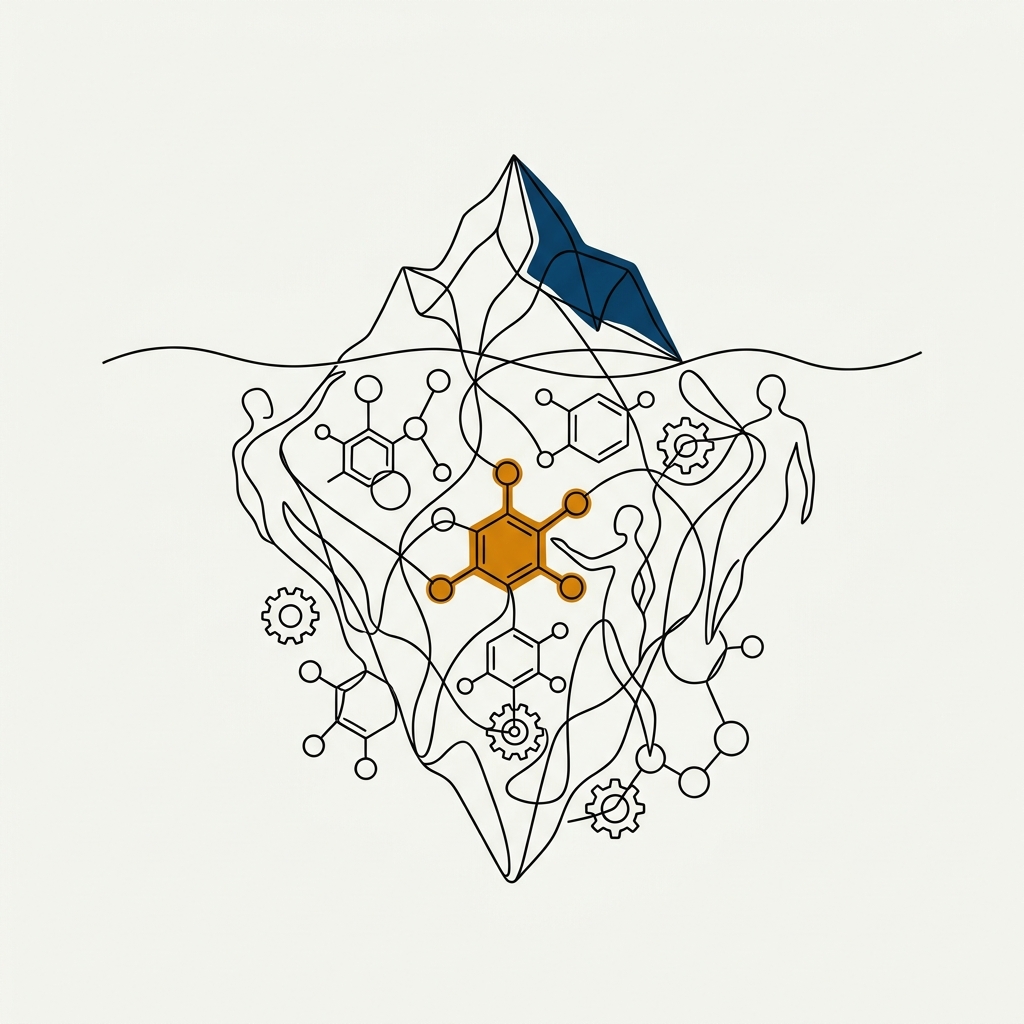
Jonathan Haidt
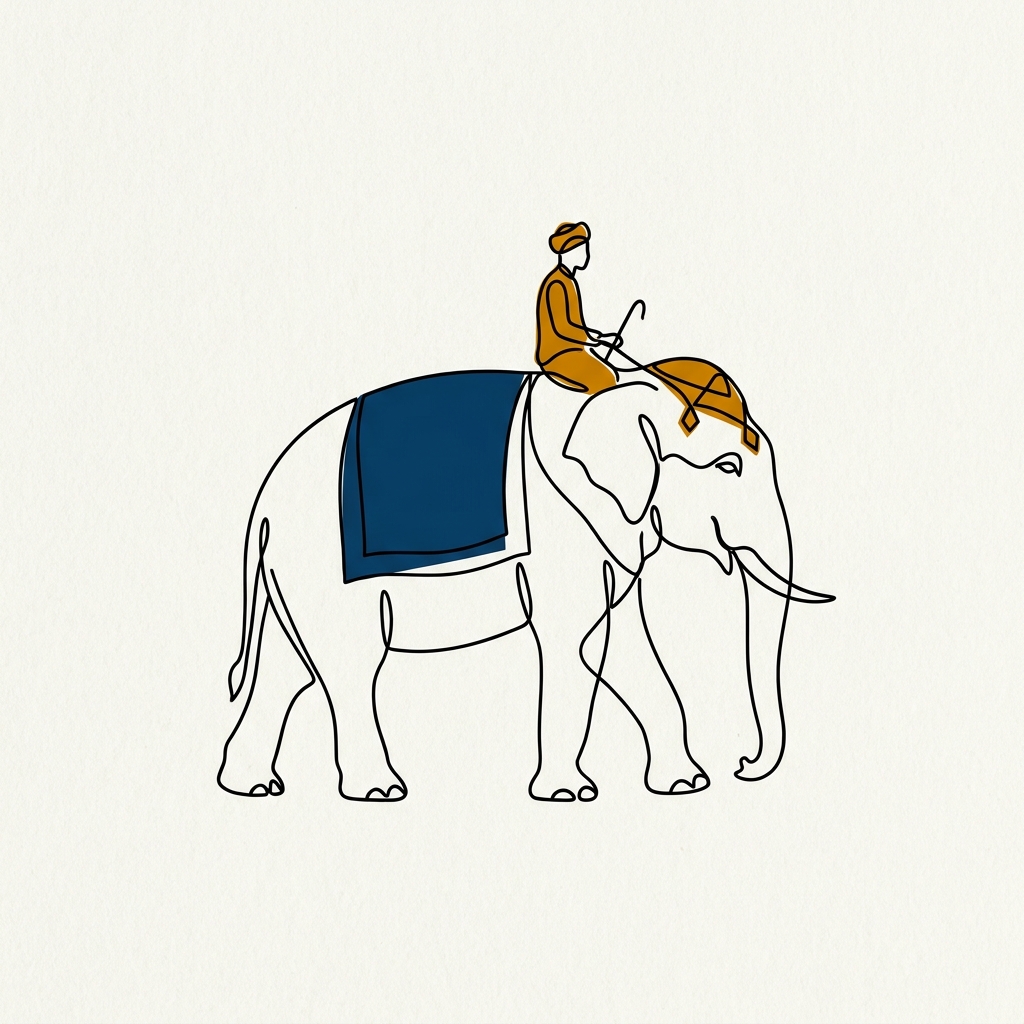
Why this matters for your team, your habits, your life
Discipline is not a feeling.
Habits are not behaviours.
Success is not motivation.
They are all hormonal protocols.
If you don't design your chemistry, your environment will design it for you. And your environment was built to keep you scrolling, snacking, stressed.
The cast
Eight names. Learn what each one wants from you.
The hijack economy
Trillion-dollar companies are competing for your hormones. They win by default.
Dopamine slot machine. Designed for the next-pull craving.
Cortisol drip. Outrage is the engagement metric.
Insulin rollercoaster. Engineered past your satiety signals.
Serotonin crash. Curated comparison, infinite scroll.
Oxytocin starvation. Likes don't replace touch.
Endorphin drought. The body needs effort to feel okay.
Your default settings will lose. You have to design.
Dopamine fires for the prediction of reward — not the reward itself. It spikes before you get the thing, and falls silent once you have it.
The chase feels richer than the catch.
Dopamine drives pursuit, not pleasure. That's a different system entirely.
Unpredictable rewards produce the most persistent behaviour. Slot machines, social feeds, dating apps — same logic.
The rule: Make hard things easy to start. Make easy things hard to reach.
Cortisol was built for predators. It's getting triggered by email.
Zebras don't get ulcers — their stress is acute. Ours is chronic. Same alarm, never reset.
Acute: focus, energy, action.
Chronic: belly fat, insomnia, anxiety, weak immunity, memory loss.
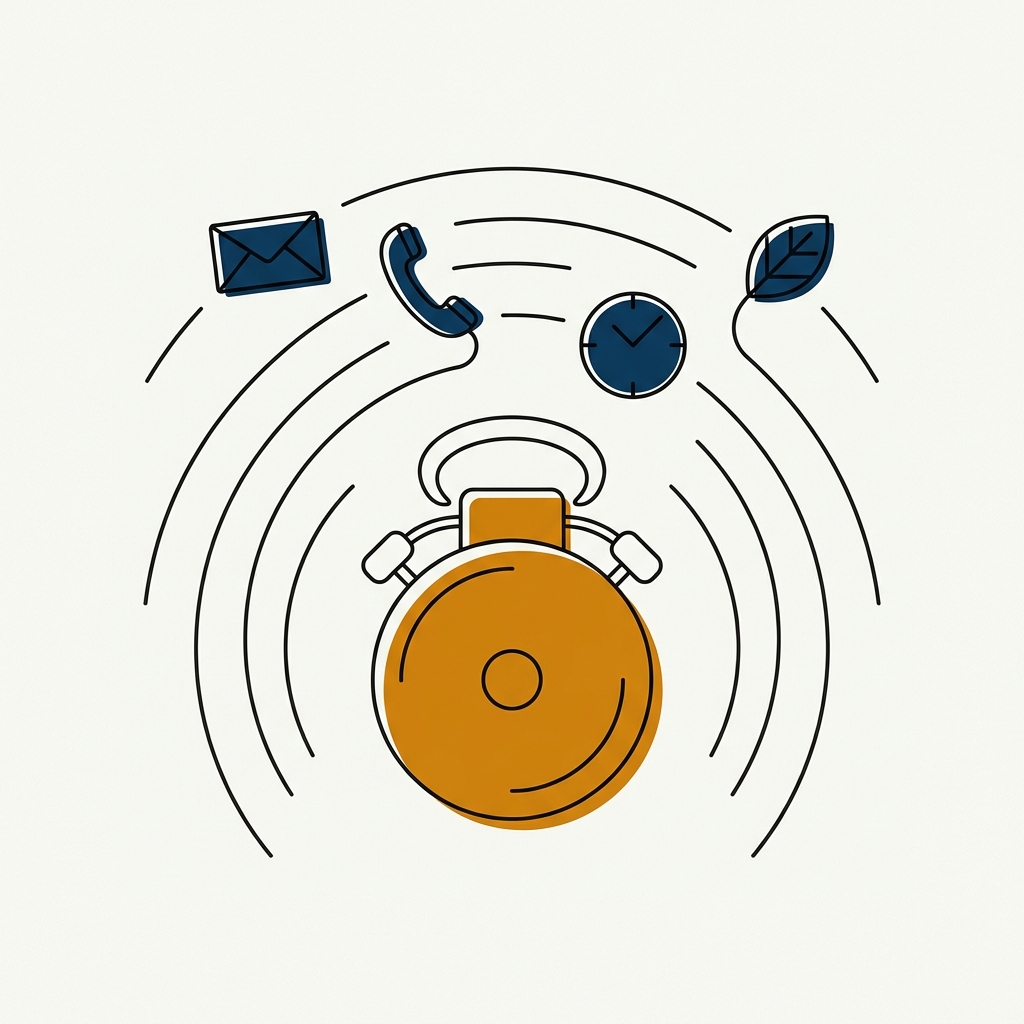
Cortisol has a natural daily rhythm — peak in the morning, trough at night. Modern life flattens it into a steady drip. Your job: restore the curve.
10 minutes outside, no glasses. Within an hour of waking. Sets cortisol's morning peak right — which means it falls properly at night.
The nervous system's brake. 4-7-8 breathing (in 4, hold 7, out 8) drops cortisol within minutes. Try before any tense meeting.
30 minutes where you can still hold a conversation. Burns excess cortisol, doesn't add to it. (Sprints during high stress can backfire.)
Every notification is a tiny predator signal. Push the first cortisol hit later — and you protect your whole day's nervous system.
News is engineered cortisol. Read it once a day at a fixed time. Never first thing. Never last thing.
One bad night raises next-day cortisol by ~37%. Non-negotiable.
The "I'm okay, I have enough" molecule. Driven less by what you have, more by where you think you stand.
A mid-level manager in a small town can feel richer than a VP in Mumbai. Status is local. Comparison is poison.
~90% of serotonin is made in the gut, not the brain. Gut health is mood health.
Released during touch, eye contact, shared meals, vulnerability and helping. Builds trust, lowers cortisol, raises empathy.
This is why high-performing teams need real time together — not just Slack and Zoom. You can't bond over async.
~20 seconds of warm contact reliably raises oxytocin and drops cortisol.
Endorphins bind to the same receptors as morphine. That's not a metaphor. The "runner's high" is real chemistry.
Released during physical effort, laughter, stretching, cold and heat exposure. The body rewards effort with relief.
The body reads effort as pain. Endorphins dull it. The relief outlasts the workout.
The performance hormone. Pre-presentation, pre-match, pre-deadline. The same molecule — whether you call it nerves or excitement.
The arousal is identical. What you tell yourself decides whether it becomes panic or focus.
"I am excited" beats "calm down" — measured in karaoke, public speaking, maths tests.
Released after eating to shuttle sugar into your cells. The hormone that decides: burn or store.
A high-carb meal: insulin spike → energy crash → 3 p.m. brain fog → bad decisions, snacking, the next crash. The cycle most Indians live in.
Chronic high insulin → fat, inflammation, diabetes, fatty liver, dementia. Biggest preventable lever for a long, sharp life.
Every other hormone on this slide resets during sleep. Cortisol normalises. Dopamine sensitivity restores. Growth hormone repairs the body. Leptin/ghrelin rebalance hunger.
A bad night doesn't just make you tired. It mistunes every other system for 24+ hours.
17 hours awake = 0.05% BAC in cognition. 24 hours = legally drunk.
The good news
Morning sun on face. Dim evenings. Your body uses light to set every other clock.
Walk daily, lift weekly, sweat regularly. Sitting is a hormonal flatline.
Protein, fibre, slow carbs. Eat earlier, eat less often, eat real.
7-9 hours, same time daily. The master reset for everything else.
Master these four and every hormone in this deck falls in line. No supplements required.
The habit loop
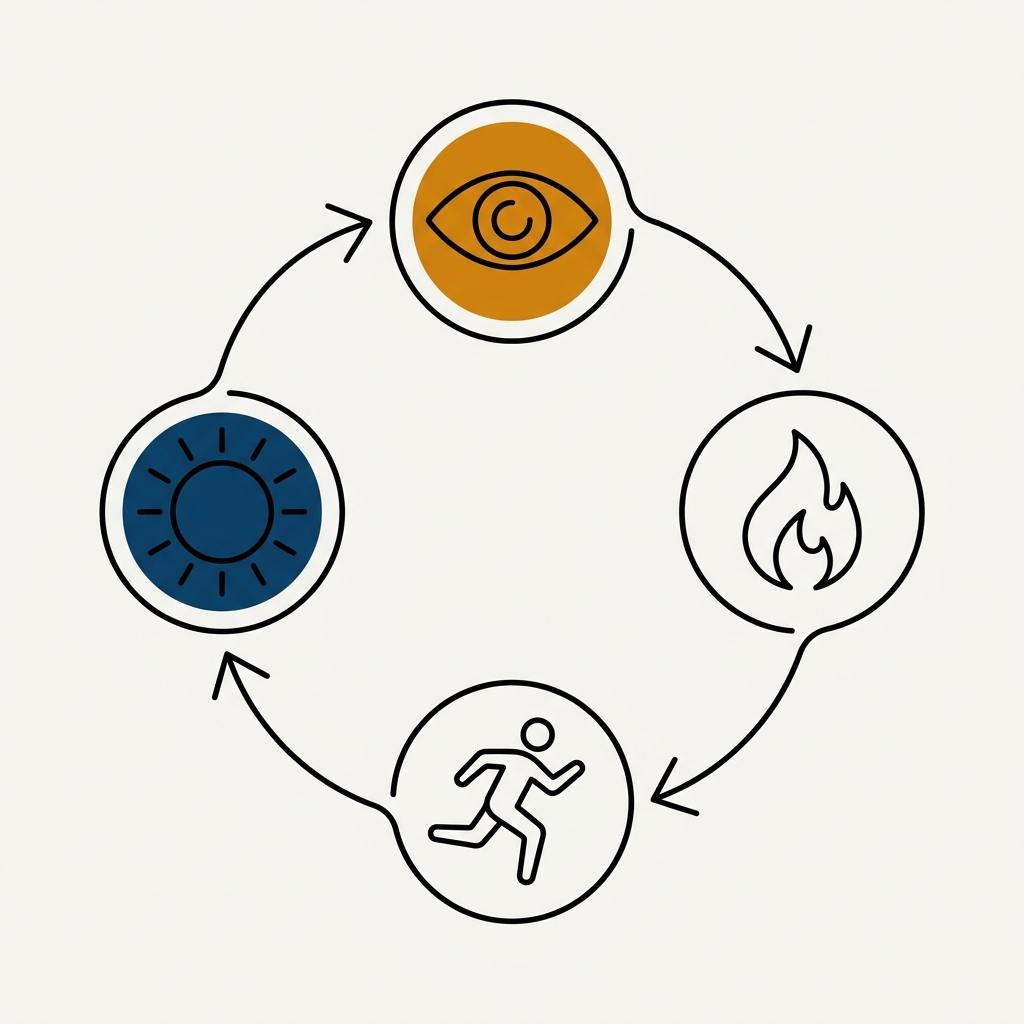
43% of daily behaviour is habitual, not chosen. The Cue → Action → Reward loop is a chemistry recipe.
The big reframe
Discipline isn't willpower.
It's hormonal hygiene.
The disciplined person isn't fighting harder. They've removed the cue (phone out of the bedroom), pre-loaded the dopamine (gym clothes laid out), and paid down the cortisol (slept seven hours).
They didn't try harder. They designed better.
Self-awareness check
Before you fix anything, observe. For one week, ask yourself in the moment:
What were you actually feeling? Bored? Anxious? Lonely? Avoidant? The phone is rarely the craving. It's a dopamine bandage on some other feeling.
Were you tired, hungry, or stressed first? 90% of "personality flaws" are just unmet physiology.
What time was your last screen, last meal, last coffee? Insomnia is usually authored 6 hours earlier.
Sun? Movement? Conversation? Food? Sleep? Run the four-lever audit. The answer is almost always there.
Awareness is the upgrade. You can't fix what you don't see.
Protocol 1 of 3
Your first 60-90 minutes set every hormone for the next 16 hours. Spend them well.
Protocol 2 of 3
Tomorrow morning's energy is decided tonight. Your evening is the most under-used three hours of your day.
Protocol 3 of 3
Most office cultures are accidentally optimised for cortisol and depleted dopamine. A small redesign goes far.
Movement + sunlight + low-pressure conversation. Endorphin + oxytocin up, cortisol down. Better candour than a meeting room.
Don't sit on it. Spoken recognition spikes serotonin in the receiver and the room — mirror neurons reflect.
Shared meals are the original team-building tool. Three a week, nothing fancy.
Two protected 90-min windows daily. Notifications off. Deep work needs un-fragmented dopamine.
Celebrate the milestone before sprinting to the next. An unclosed dopamine loop is a hollow win.
Cortisol peaks naturally between 6 and 10 a.m. — that's useful cortisol. Save admin for after lunch.
Your homework
Three changes. Four levers touched. You'll feel it by Day 4.
The point isn't perfection. It's noticing what shifts when you stop fighting your chemistry.
The big idea
You're not lazy.
You're not weak.
You're not broken.
You're a moist robot
with bad default settings.
Change the settings.
The whole hour, in one slide
Dopamine. Serotonin. Oxytocin. Endorphins. Cortisol. Adrenaline. Insulin. Melatonin.
Light. Movement. Food. Sleep.
Morning. Evening. Work.
Phone out. Sun on face. Walk after dinner.
That's the whole hour. The rest is practice.
In closing
Run the robot.
Or it runs you.
Notice the chemistry. Design the inputs. Repeat until it's automatic.
Questions · Conversation · Coffee